




















100Ah LiFePO4 Battery Comparison: EVE LF100LA vs LF105 vs CALB L160F100
2026.10.21


For energy storage system (ESS) integrators, electric mobility OEMs, UPS and data center equipment manufacturers, telecom power suppliers, and industrial vehicle manufacturers, choosing the right 100Ah LiFePO4 battery involves much more than comparing capacity.
Cell dimensions, cycle life, charge and discharge rates, operating temperature, consistency, traceability, and supply reliability can all affect battery pack design and long-term operating costs.
A 100Ah LFP battery can be used in residential and commercial energy storage, backup power, telecom systems, portable power stations, AGVs, forklifts, golf carts, marine systems, and other low-speed electric vehicles. Cells can also be connected in series or parallel to build 12.8V, 25.6V, 48V, 51.2V, and higher-voltage battery systems.
In this guide, we compare three established 100Ah-class prismatic LiFePO4 cells: EVE LF100LA, EVE LF105, and CALB L160F100. Their nominal capacities are 102Ah, 105Ah, and 100Ah, respectively.

EVE LF100LA vs LF105 vs CALB L160F100: Specification Comparison
|
Specification |
EVE LF100LA |
EVE LF105 |
CALB L160F100 |
|
Chemistry and format |
Prismatic LiFePO4 |
Prismatic LiFePO4 |
|
|
Nominal voltage |
3.2V |
3.2V |
3.2V |
|
Nominal capacity |
102Ah |
105Ah |
100Ah |
|
Cycle life |
Up to 5,000 cycles to 80% SOH at 25°C, 0.5C/0.5C |
≥5,000 cycles to 80% capacity retention under standard conditions |
≥3,000 cycles to 80% of rated capacity at room temperature, 1C/1C |
|
Weight |
1.985 ± 0.10kg |
Approx. 1.98kg |
Approx. 1.97kg |
|
Dimensions |
160.0 × 50.1 × 118.5mm |
130.3 × 36.3 × 200.5mm |
Approx. 160 × 50 × 129mm |
|
Internal resistance |
≤0.5mΩ |
~0.32mΩ |
Typically 0.2–0.4mΩ |
|
Charge/discharge capability |
Up to 1C/1C |
1C standard, 2C continuous discharge, 3C peak discharge |
0.5C standard, up to 1C continuous |
|
Charge temperature |
0 to 65°C |
-10 to 65°C |
Commonly -5 to 55°C |
|
Discharge temperature |
-20 to 65°C |
-35 to 65°C |
Commonly -30 to 60°C |
|
Typical applications |
ESS, telecom, home storage, C&I storage, marine |
ESS, UPS, AGV, golf cart, forklift, marine, low-speed mobility |
ESS, EV and other power applications |
1. EVE LF100LA Battery: A Reliable 102Ah Cell for Energy Storage
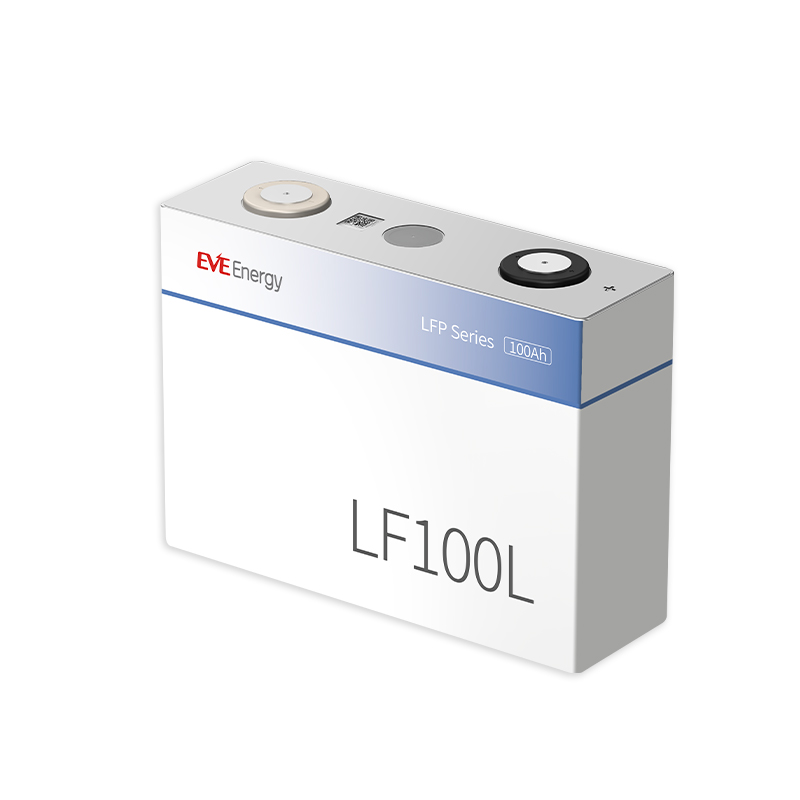
The EVE LF100LA is a 3.2V 102Ah prismatic LiFePO4 battery cell designed for long-term energy storage applications. Combining high capacity, durable cycle performance, and a compact structure, EVE LF100LA provides a dependable power solution for residential storage, telecommunications, and commercial energy systems.

Key Features and Advantages:
102Ah Capacity for Efficient Energy Storage: The LF100LA delivers approximately 326.4Wh of nominal energy with an energy density of around 164Wh/kg. Its dimensions of 160 × 50.1 × 118.5mm make it suitable for space-conscious battery modules and energy storage systems.
Long Cycle Life and Reduced Maintenance: The LF100LA offers up to 5,000 charge-discharge cycles while retaining 80% of its original capacity under specified testing conditions (25°C, 0.5C charging and discharging). This durability helps reduce the frequency of battery replacement and supports lower long-term maintenance costs.
Stable Performance Across Different Temperatures: The cell supports charging temperatures from 0°C to 65°C and discharging temperatures from -20°C to 65°C. Its low initial internal resistance of no more than 0.5mΩ supports efficient energy transfer and stable charge-discharge performance.
Versatile Energy Storage Applications: The LF100LA is particularly suitable for home energy storage systems, communication base stations, industrial and commercial ESS, backup power, and selected marine energy storage applications. Its combination of energy capacity and long cycle life makes it a practical solution for systems requiring frequent and reliable energy delivery.
Convenient Supply from EVE Germany Warehouse: In addition to factory-direct supply, the LF100LA cells can be shipped from EVE's warehouse in Germany, subject to stock availability. This provides European customers with a convenient regional purchasing option and can help shorten delivery lead times compared with overseas dispatch.
2. EVE LF105 Battery: Long Cycle Life, Strong Output, and Wide-Temperature Performance
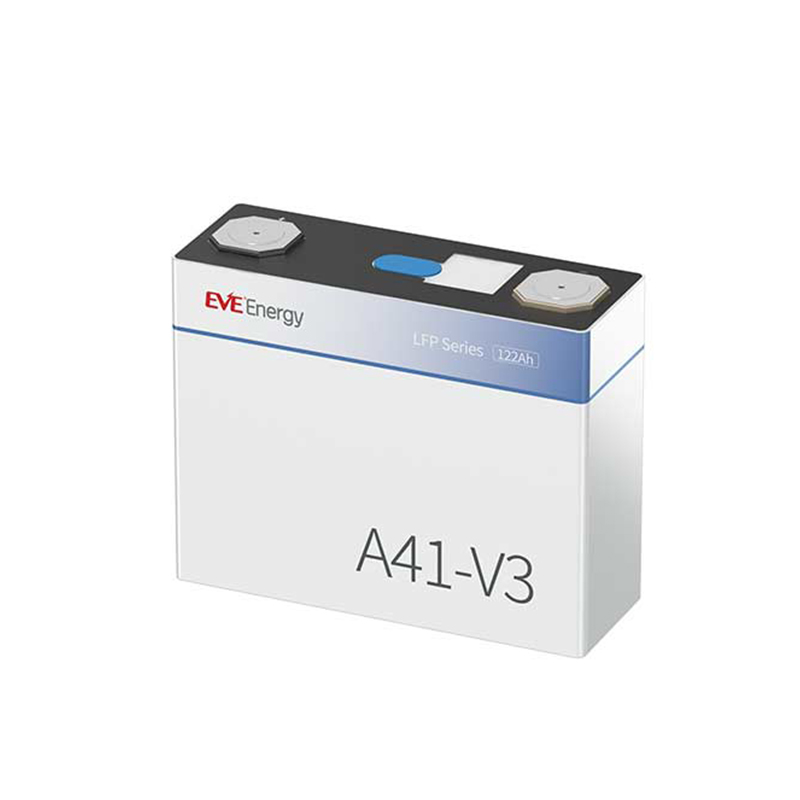
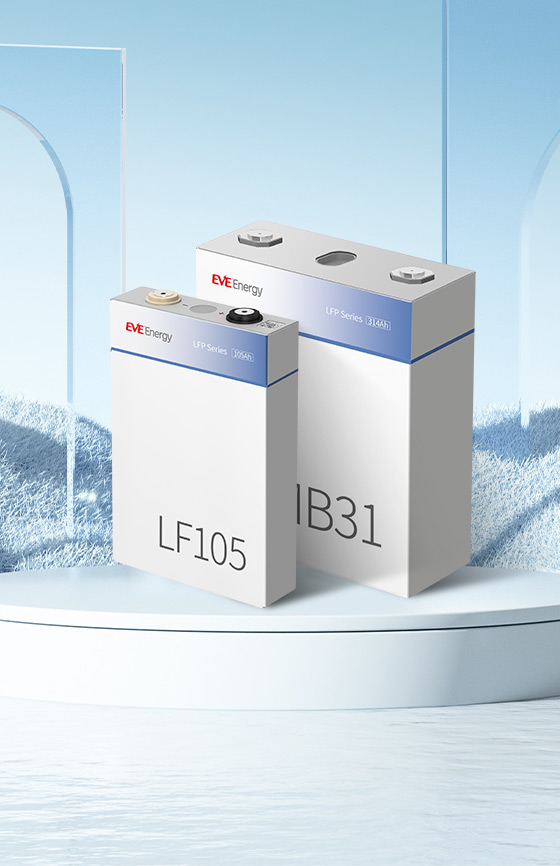
The EVE LF105 is a 3.2V 105Ah prismatic LiFePO4 battery cell engineered to balance long cycle life, power output, and adaptability across demanding operating environments. Built for both energy storage and low-speed electric mobility, our LF105 is a versatile solution for customers seeking reliable performance and flexible system integration.

Key Features and Advantages:
High Energy Density and Compact Design: The LF105 delivers approximately 336Wh of nominal energy with an energy density of around 169Wh/kg. Measuring 130.3 × 36.35 × 200.5mm and weighing approximately 1.98kg, its slim prismatic structure enables efficient integration into battery modules where weight and installation space are important.
5,000-Cycle Durability: Under standard testing conditions of 25°C and 0.5C charging/discharging, the LF105 is rated for up to 5,000 cycles to 80% state of health. This extended cycle performance helps minimize replacement frequency and improves long-term value in residential ESS, AGVs, forklifts, and other frequently operated equipment.
Strong Charge and Discharge Capability: Beyond its standard 0.5C charge-discharge profile, the LF105 can support up to 1C charging, 2C and 3C peak discharge under specified operating conditions. This flexibility makes it suitable for applications requiring additional power during acceleration, startup, or periods of increased load. Actual current limits and peak durations must follow the applicable cell specification.
Excellent Wide-Temperature Adaptability: With an operating charging-temperature range of -10°C to 65°C and a discharging-temperature range of -35°C to 65°C, the LF105 supports battery-system design for demanding climates. Its broad temperature capability is particularly valuable for outdoor equipment, industrial transportation, and backup power systems, provided appropriate temperature-dependent controls are used.
Low Internal Resistance and Stable Power Delivery: The LF105 features an initial internal resistance of approximately 0.32mΩ ± 0.05mΩ (AC, 1 kHz, 19%~40% SOC, fresh cell). This supports efficient power transfer and helps limit resistive energy losses and heat generation, contributing to consistent system performance when combined with proper electrical and thermal management.
Flexible Battery Pack Configurations: LF105 can support configurations such as 12.8V, 25.6V, 48V, and 51.2V. For example, a 1P16S configuration provides 51.2V and 105Ah, with approximately 5.38kWh of nominal energy. These options allow the cell to serve residential solar storage, telecom backup, golf carts, AGVs, forklifts, marine power, and specialized industrial vehicles.
Quality Assurance and Documentation Support: EVE's automated manufacturing processes and cell-quality controls help maintain product consistency. Original Grade A LF105 cells can be supplied with traceable batch information. Relevant supporting documentation may include UN38.3, MSDS, CE, and applicable IEC or UL certificates, depending on the product configuration and market requirements.
For European OEMs and system integrators, EVE LF105 can also be shipped from EVE’s Germany warehouse.

3. CALB L160F100 Battery: A Compact 100Ah LiFePO4 Cell
The CALB L160F100 is a 3.2V 100Ah prismatic LiFePO4 battery cell designed for rechargeable battery systems. Its aluminum housing, relatively compact dimensions, and wide operating-temperature capabilities make it an option for energy storage and electric mobility applications.
Key Features and Advantages:
100Ah Nominal Capacity: The L160F100 provides approximately 320Wh of nominal energy per cell. This makes it suitable for modular battery systems where a balance of capacity, system size, and energy delivery is required.
Compact Aluminum Housing: Measuring approximately 160 × 50 × 129mm and weighing around 1.97kg, the cell offers a manageable format for multi-cell battery modules. Its aluminum shell provides a practical structural foundation for module assembly, although enclosure support and electrical insulation remain essential.
Low Internal Resistance: The listed internal resistance of 0.2–0.4mΩ supports efficient current delivery and helps reduce electrical losses within properly designed battery systems. Its performance should be evaluated alongside the intended operating current, cooling conditions, and battery management system.
Wide Operating-Temperature Range: The L160F100 supports charging from -5°C to 55°C and discharging from -30°C to 60°C. This operating range makes it applicable to systems exposed to varying environmental temperatures, with suitable battery management and thermal protection.
Adaptable for Different Battery Applications: Its LiFePO4 chemistry and 100Ah capacity make it a candidate for residential energy storage, solar battery systems, recreational vehicles, and selected electric mobility applications. System designers should verify the exact cell version, current ratings, terminal arrangement, and integration requirements before procurement.
How to Choose a Reliable 100Ah LiFePO4 Battery Cell Supplier
Choosing a suitable cell is only half of a B2B purchasing decision. The capabilities of the supplier can have an equally important impact on production yield, delivery reliability, compliance, and after-sales costs.
When sourcing 100Ah lithium batteries, buyers should evaluate the following areas:
Request a complete datasheet. Confirm nominal voltage, capacity, dimensions, weight, internal resistance, charge/discharge limits, cut-off voltages, and recommended operating temperatures.
Check production and traceability information. Ask for production date, batch identification, serial or QR/DMC information, test records, and traceability documentation. For pack production, buyers should also define acceptable matching tolerances for capacity, voltage, and internal resistance.
Confirm exactly what is supplied. Verify that cells are new and clarify whether terminal hardware, bolts, busbars, insulation covers, separators, or other accessories are included.

Evaluate MOQ, lead time, packaging, and logistics. Shipping lithium batteries internationally requires suitable dangerous-goods packaging and documentation. European buyers should also consider whether the supplier has local inventory. In EVE's case, LF105 and LF100LA are available through our EU stock system supported by a Germany warehouse, providing European B2B customers with a local sourcing channel for these cells. Buyers can contact EVE’s team to confirm current German stock, order quantities, dispatch arrangements, and delivery coverage.
Review warranty and technical support. A professional battery supplier should be able to respond to specification questions, quality claims, batch issues, and application-related technical inquiries.
Test samples before bulk purchasing. For larger projects, sample testing can verify capacity, internal resistance, mechanical dimensions, charge/discharge behavior, and cell-to-cell consistency before production quantities are approved.
Note that the lowest unit price does not necessarily provide the lowest total cost.
Poor cell matching can increase sorting and balancing work. Weak packaging can cause transportation damage. Missing documents may delay shipments or certification. Inconsistent capacity and high failure rates can create additional production, warranty, and field-service costs.
For ESS integrators and OEMs, the more useful calculation is therefore the total sourcing cost, including cell quality, consistency, logistics, documentation, technical support, and expected service life.
Which 100Ah LFP Battery Fits Your Project?
EVE LF100LA, EVE LF105, and CALB L160F100 all belong to the 100Ah-class prismatic LiFePO4 category, but they are designed around different priorities.
The LF100LA combines 102Ah capacity with a relatively compact format and a strong energy-storage focus. The LF105 offers 105Ah capacity, wide-temperature operation, long cycle life, and stronger rate capability for both ESS and low-speed mobility applications. The L160F100 provides a conventional 100Ah format for energy storage and electric power projects, provided that buyers carefully verify the applicable specification and production batch.
For B2B customers comparing a 100Ah LiFePO4 battery, the right approach is to begin with the electrical, mechanical, thermal, lifetime, certification, and supply-chain requirements of the final battery system.
EVE supports 100Ah-class battery projects with cell options such as LF100LA and LF105, as well as EU inventory supported by our Germany warehouse for European customers. This combination of product selection, local availability, traceability, and technical support can help battery manufacturers and system integrators move more efficiently from evaluation and sample testing to commercial-volume sourcing.
If you need any support, you can contact EVE’s team here.